


The Camera Must Read From the Correct Position
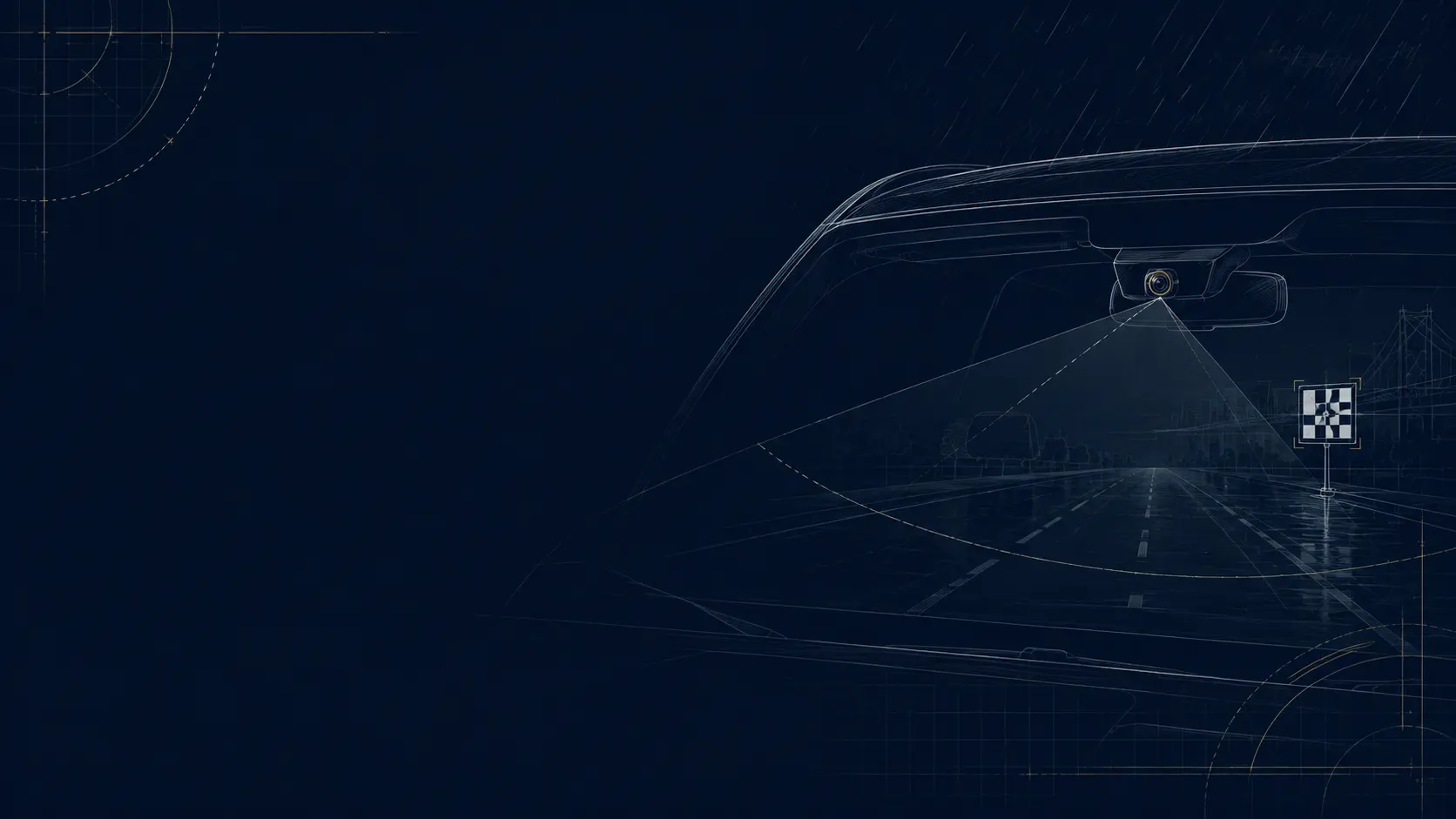
The windshield and camera mount establish the viewing angle. Calibration confirms the system against the required reference.
 Request a Quote
ADAS Camera Calibration
We recalibrate windshield-mounted cameras using vehicle-specific procedures, helping driver-assistance features read the road as designed.
Why Calibration Matters
A windshield-mounted camera may need recalibration after glass replacement, even when the glass looks perfect and no warning appears.
The windshield and camera mount establish the viewing angle. Calibration confirms the system against the required reference.
Some vehicles may need calibration without an obvious dashboard alert. Manufacturer instructions determine the requirement.
Calibration helps the camera interpret lanes, vehicles, and road conditions from the position intended for your vehicle.
When It Is Needed
Calibration requirements vary by vehicle. We identify the installed technology and follow the procedure that applies to it.
Many vehicles require the forward camera to be calibrated after the windshield is removed, installed, or replaced.
Removing the camera, mirror, bracket, or related mount may create a calibration event for some vehicles.
Certain repairs, diagnostic codes, or manufacturer bulletins may call for aiming, initialization, or recalibration.
The Right Method
The required method comes from the vehicle maker. Some systems use targets, some use a road drive, and others require both.

Targets are positioned at specified distances and angles while a scan tool guides the camera-alignment procedure.

The vehicle is driven under required speed, road, traffic, and weather conditions while the system completes its routine.
Static + Dynamic
When both methods are required, each step must be completed under the conditions specified for that vehicle.
What It Supports
Depending on the vehicle, the forward camera may support one or more of these driver-assistance features.
Helps detect lane markings and keep you centered in your lane.
Helps detect potential collisions and can apply the brakes.
Helps maintain a set speed and safe following distance.
Helps switch high beams automatically and recognize road signs.
How It Works
We confirm the equipment, identify the required method, complete the calibration, and review the result before handoff.

We use the vehicle details and camera configuration to confirm the correct glass and calibration requirements.
The vehicle-specific instructions establish the tools, targets, measurements, conditions, and required sequence.
We complete the specified static procedure, dynamic procedure, or combination under suitable conditions.
We confirm the calibration routine completed as required and explain any next steps before returning the vehicle.
One Coordinated Service
Clear Image coordinates the glass replacement and required camera calibration so the repair follows one clear plan.

You receive one point of contact for the windshield, camera requirements, scheduling, and service questions.
The windshield, camera area, brackets, and installed options must match the vehicle before calibration begins.
We explain what your vehicle calls for, what the service includes, and any conditions that affect the appointment.
Plan the Right Location
Mobile availability depends on the vehicle, required method, workspace, weather, road conditions, and access at your location.

WORKSPACE + POSITIONING
Static procedures may need level space, controlled measurements, clear target placement, and room around the vehicle.
WEATHER + ROAD CONDITIONS
Dynamic procedures may require visible lane markings, suitable speeds, manageable traffic, and acceptable weather.
PLAN CONFIRMED BEFORE ARRIVAL
Share your vehicle and location details so we can identify the likely method and choose an appropriate service plan.
Proven Experience
Clear Image brings deep glass knowledge, careful installation, and direct communication to every appointment.
Since my car has EyeSight features, he also took care of recalibrating the technology. I am so pleased with his expertise.

He comes to where you're at, explains what's good, replaces your glass, and is outta there in no time.
Kiel is highly professional and knowledgeable. Job was done correctly and on time.
Areas We Serve
Clear Image serves drivers throughout the Portland metro area. Availability still depends on the vehicle and calibration method.
Portland, Beaverton, Hillsboro, Tigard, Tualatin, Sherwood, Wilsonville, Lake Oswego, West Linn, Milwaukie, Gladstone, and Oregon City.
Loading service area map
Select a service area to view it on the map
Common Questions
No. Requirements depend on your vehicle's equipment and manufacturer instructions. We verify what applies before service.
Static calibration uses positioned targets. Dynamic calibration uses a controlled road drive. Some vehicles require both.
Sometimes. The vehicle, method, workspace, weather, traffic, and road conditions determine whether mobile service is suitable.
Timing depends on the vehicle, required method, conditions, and whether static and dynamic procedures are both required.
Not always. Manufacturer procedures—not dashboard lights alone—determine when the camera requires calibration.
Depending on the vehicle, camera alignment may relate to lane, collision, braking, cruise, lighting, or sign-recognition features.
Coverage varies by policy and claim. We can provide the service details needed when you discuss coverage with your insurer.
Clear Help Starts Here
Send your vehicle details, glass location, and a few photos. We will review the job and outline the practical next step.